Emily Sharp is a licensed art therapist and psychotherapist who combines talk therapy with creative expression. From her early work in New York to her current online practice and international retreats, she explores how creativity can support resilience, self-discovery, and joy.
In this talk, Emily reflects on her transition from clinical psychotherapy to art therapy, discusses the importance of creativity in mental health, and shares some of the tools and techniques she uses in her practice to activate creativity and creative flow.
Let’s dive in!
Listen to this Episode on Bloomerangas Podcast 🎙️
Subscribe to the Bloomerangas Podcast



From Psychotherapy to Art Therapy
For Emily, the road to art therapy began with a simple realization: she wanted to be creative and help people at the same time. As an undergraduate studying studio art and creative writing, she knew that a purely artistic career wasn’t her calling—nor was a purely clinical one. A chance conversation while backpacking in South America introduced her to the field of art therapy. As Emily recalls, “it sounded like it might make sense.” The idea immediately clicked. “I want to do art and I want to be creative, but I also want to help people,” she realized.
That epiphany led Emily to New York City, where she earned her master’s through a dual program in psychotherapy and art therapy at NYU. Immersed in the city’s vibrant energy, she found creativity around every corner. “I think there’s maybe no better place to spend your 20s… there’s an adventure always waiting,” she recalls. The city’s constant stimulation, she notes, helped fuel her creative growth. Following grad school, Emily completed her clinical training and licensure—“a whole process” akin to a residency—and then dove into practice.
In those early years, Emily worked with diverse communities, from leading art therapy groups in supportive housing to partnering with MoMA on a visiting-artist program for residents. She even facilitated art-making with older adults suffering from Alzheimer’s and Parkinson’s, and contributed to research on how art therapy can positively change the way the brain works. These experiences cemented her belief that creativity isn’t a luxury or afterthought—it’s a profound catalyst for healing. Eventually, she transitioned into private practice, carrying forward all those rich insights and approaches.
The Cathartic Power of Creative Expression
At its heart, Emily Sharp’s work illustrates a simple truth: making art can be therapeutic even if you’re not an “artist.” “Art therapy is really just a form of psychotherapy,” she explains. You still talk through life’s struggles as you would with any therapist, “but then you also have the opportunity to explore it visually.” This visual element can reveal new perspectives that words alone might miss.
We spend so much of our lives in words—talking, writing, thinking—that we often build defensive walls around our emotions. Art has a way of lowering those defenses, allowing feelings to flow through colors and shapes when they might otherwise stay locked behind words. “The art-making process is cathartic in and of itself,” Emily says. Creating something offers a physical outlet—“you feel like you can release something” from within.
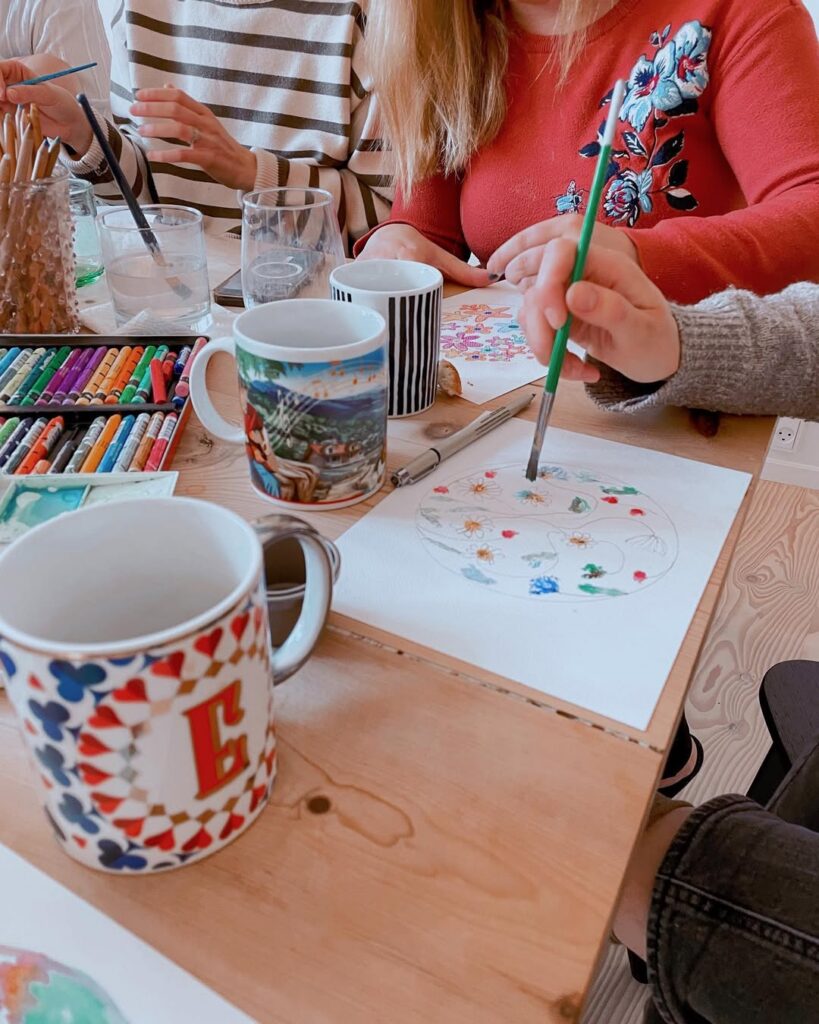
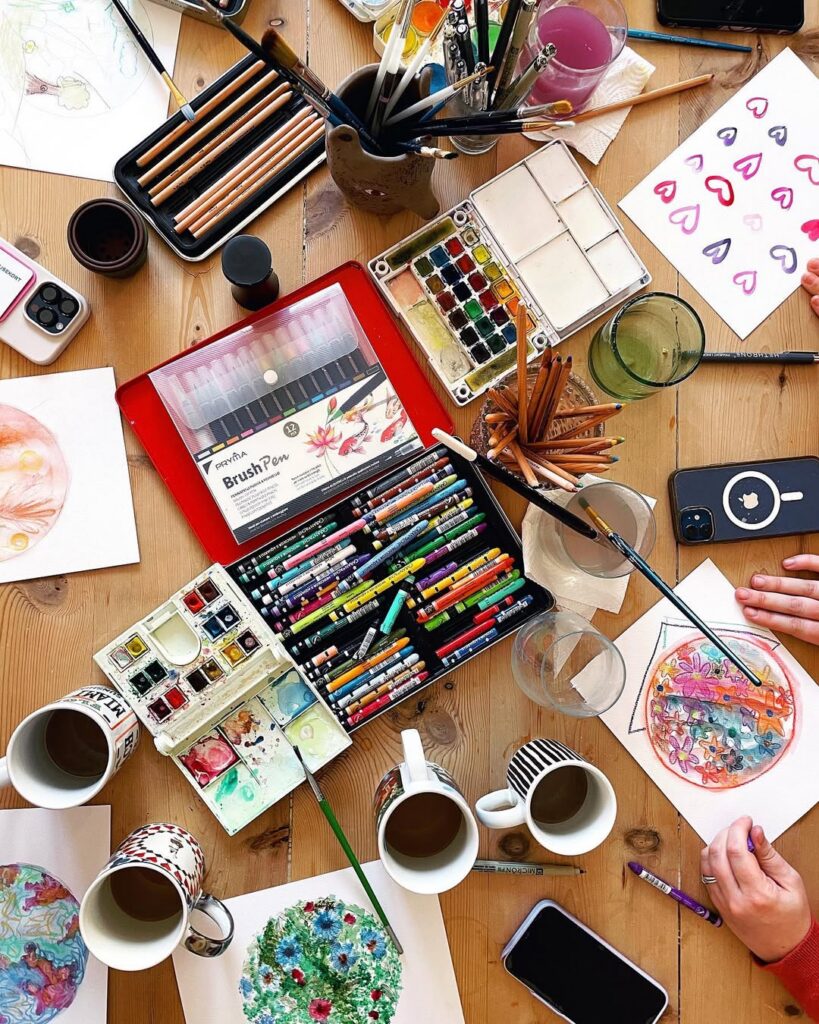
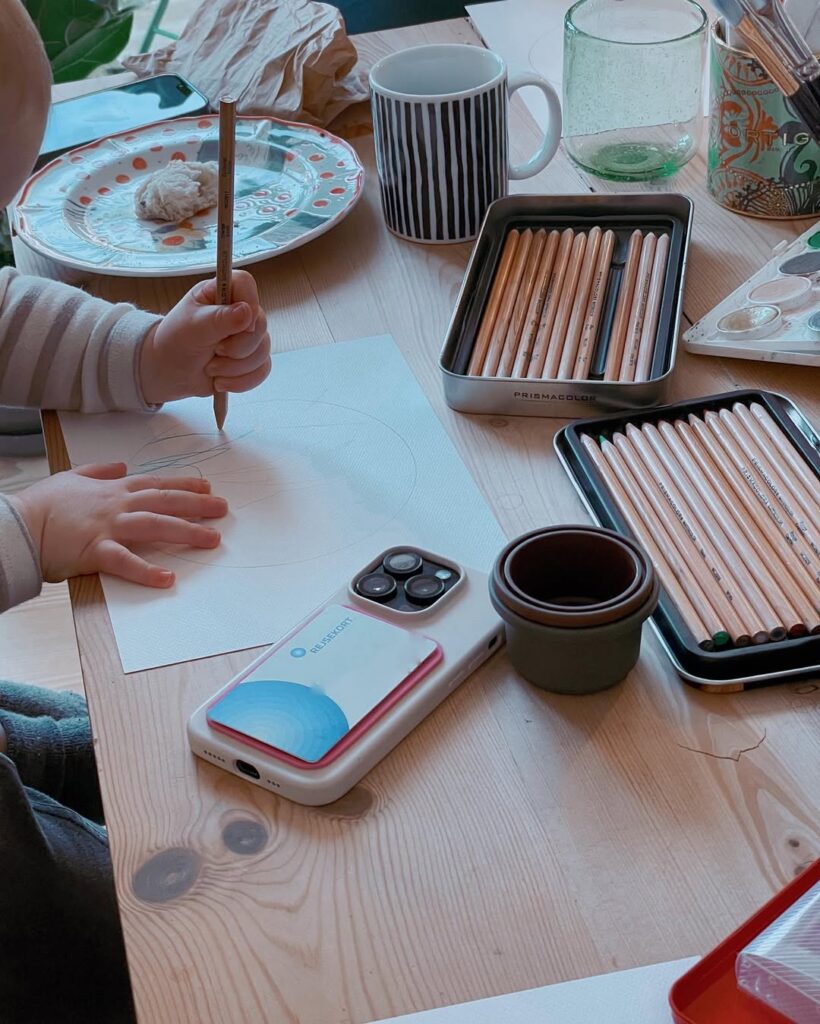
Creating an image in therapy becomes a kind of dialogue between the subconscious and conscious mind, Emily explains. The artwork acts as a safe container—a metaphor you can examine and discuss without feeling exposed. “Through your art, you’re able to express sometimes even more than you might be able to say,” she reflects. The image can hold your feelings for you, without you having to speak them outright. A skilled facilitator can then guide you to interpret and draw insights from what you created, turning a freeform painting or clay piece into a bridge to self-understanding. In Emily’s words, this process is “insight building” through creative expression.
One of Emily’s core philosophies is that art therapy is for everyone, not just the “creative” or “talented.” Many people hesitate, saying “I’m not an artist… I can’t make art.” Emily gently assures them that “you absolutely do not have to have any background in art to come to art therapy and really get something from it.” In fact, she reminds clients that “we all start off as artists.” She often points out that if you ask a room full of kindergartners who can draw, every hand will shoot up. Eventually, the world steps in and tells some of us that we’re “not good at it” or “more of a math person,” and we start to shy away from our inherent creativity. The aim in art therapy is to reclaim that birthright of creative expression. It’s “not about the product or what it looks like. It’s really about the process,” Emily emphasizes. By taking the focus off the final product, she relieves people of the pressure to make something perfect. When the process is the focus, art becomes play and exploration—and in that state, genuine healing and growth can happen.
Choosing the Right Tools
An interesting aspect of Emily’s practice is her intentional use of different art mediums as tools to support emotional needs. Not all creative materials feel the same to use; finger-painting with watercolors, for example, evokes a different emotional experience than sketching with a sharp pencil. Emily considers this carefully when guiding clients. In art therapy theory, there’s an “expressive therapies continuum” that maps materials from most structured to most fluid. In practice, Emily uses this idea to match the medium to the moment. If someone is anxious, overwhelmed, or “really elevated,” a more structured material like a pencil or marker can provide a sense of control and grounding. “You feel more contained when using it,” she explains, describing how structured tools can help soothe and contain intense emotions. On the other end, if a client feels emotionally constricted, depressed, or “stuck,” looser mediums can help “pull them out of that state.” Fluid, expressive materials—think flowing watercolors or malleable clay—encourage freedom and release, coaxing out emotions that rigid lines might not.
Emily often discusses with clients which format or medium resonates with them in each session, effectively tailoring the creative outlet to their emotional state. It’s a flexible, person-centered approach: one week might involve bold, messy painting to externalize anger or grief; another week, a simple pen-and-paper drawing might help organize racing thoughts. The key is that the tool serves the person, meeting them where they are and helping them express whatever needs to be expressed—or conversely, providing structure when things feel chaotic.
On Leading Online Art Therapy
When the COVID-19 pandemic hit, Emily—like many therapists—moved her practice entirely online. Now based in Copenhagen, she continues to work with clients around the world via virtual sessions. Shifting to remote therapy had its challenges, especially for a modality as tactile as art therapy. In an office setting, she would normally have a table brimming with art supplies for clients to use freely. Online, that physical immediacy is gone—clients must use whatever tools they have on hand, and the therapist can’t pass a brush across the room or feel the texture of the paint in real time. “There is a difference when a screen is between you, but we kind of make the most of it,” Emily notes.
Often, her online sessions are primarily talk therapy—focused conversations using classic therapeutic techniques—and then she sends clients off with creative homework to do between sessions. In this model, the therapy hour is for deep listening and guidance, and the art-making becomes a personal practice that bridges one week to the next. Clients return to the following session with their creations or reflections, and together they unpack what emerged. This rhythm helps individuals make creativity a consistent part of their routine. Emily describes the standing weekly sessions as “a really consistent form of self-care.”
Surprisingly, the virtual format has proven to be a good fit for many. Emily’s clientele often includes creatives, business owners, and freelancers with flexible schedules. Meeting online saves travel time and lets people connect from wherever they’re most comfortable. By now, all of her clients have opted to remain online even after in-person sessions became possible again. In a world where professional and personal lives are busier than ever, the convenience of virtual sessions actually helps people commit to the therapeutic creative process.
Creative Retreats
While online therapy is now a mainstay of Emily’s practice, she hasn’t given up on the power of in-person creative experiences. In fact, one of the most exciting extensions of her work has been launching immersive art retreats. “That has been my favorite thing I’ve added to my work in so long,” she says of the retreats, “it’s been wonderful.”
What began as small community art meetups in Copenhagen blossomed into full-fledged retreat programs. When Emily moved to Denmark, she noticed many newcomers and expats were hungry for connection, so she started hosting casual art nights with a friend to bring people together to create. The response was enthusiastic—people craved that open, judgment-free zone to play with art materials and meet kindred spirits.
When Emily’s co-hosting friend moved back to the U.S., the pair decided not to let geography stop them. They had always dreamed of running creative retreats in beautiful places, and now it was their chance. The duo joined forces to organize destination art retreats that blend art-making, community, and self-care. Both women bring unique strengths. Emily is a therapist, an artist, and a writer, while her retreat partner is a physician assistant in pediatric surgery as well as an art teacher. Together, they understand the needs (and potential burnout) of people in helping professions, as well as the healing power of making art.
Over the course of each retreat, participants reconnect with their artistic side through guided workshops and spontaneous projects. Activities range from printmaking and book-binding to cyanotype printing using sunlight, often drawing inspiration from the local landscape. Equally important, these retreats cultivate community and playfulness. Strangers leave as friends, bonded by shared creative discovery. Ultimately, the retreats are about letting go of expectations and immersing oneself in the process.
Tools to Activate Creativity
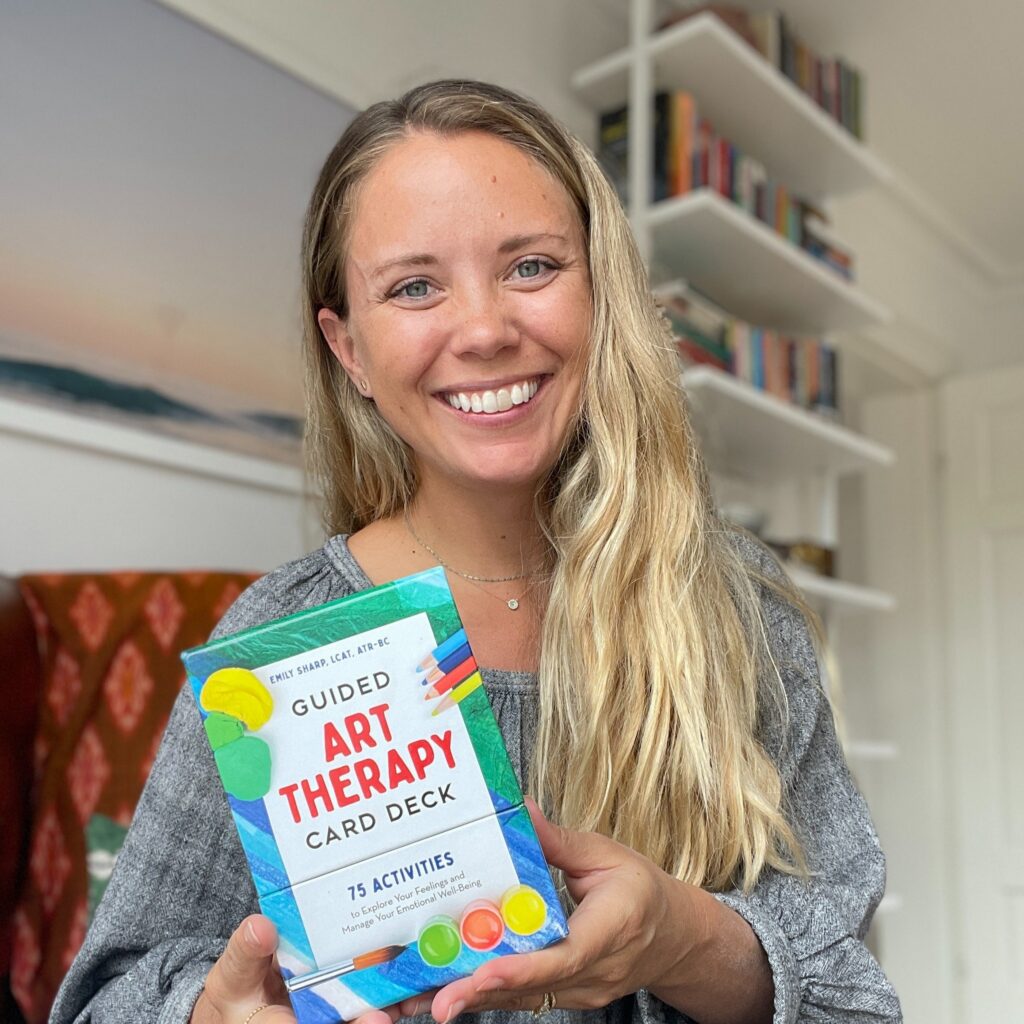
Beyond therapy sessions and retreats, Emily has found another outlet for her mission: writing and creating resources to help people tap into their own creativity. A few years ago, she published a guided art therapy card deck full of creative prompts—essentially a way for people to experience art therapy on their own at home. This deck provided users with simple creative exercises and ideas to work through emotions or spark inspiration, whether or not they had access to a therapist. People loved the accessible format, and other therapists even started using the cards with their clients as a handy tool.
Now, Emily is channeling her passion for experiencing art into the written word in another way. She’s preparing to self-publish a pocket guide titled How to See Art Differently. Aimed at museum-goers and art lovers, the guide offers tips and prompts to “get more out of your next museum or gallery visit” by engaging with art more creatively and interactively. The pocket guide encourages readers to move beyond silent observation and actually respond to artwork. Emily is excited to share it with the world soon as another tool to spark creativity in everyday life.
Balancing Creativity, Work, and Life
After over a decade in fast-paced New York, Emily relocated to Copenhagen, Denmark, and became a mother. The shift in environment and lifestyle was profound. “New York was really go, go, go… I was working a ton, and I loved it,” she admits—but that pace eventually led to burnout. Moving to Denmark, a country famous for its work-life balance and hygge simplicity, gave her a chance to recalibrate. She made a conscious decision to scale back: now she maintains a part-time private practice and reserves the rest of her time for creative work and family.
Emily’s relocation also highlighted an enlightening cultural difference. In Denmark, there’s an inherent trust and ease in daily life that lowers stress. This supportive, low-fear environment reinforces her belief that a calm nervous system is fertile ground for creativity. “When we are in a not-stressed place and our nervous systems are settled, we’re able to be more creative,” Emily observes. It’s physiologically harder to think expansively or play with new ideas when you’re stuck in fight-or-flight mode. By intentionally stepping away from the grind and embracing a gentler pace, she found her divergent thinking flourished. In short, taking care of one’s well-being isn’t just good for health—it directly feeds creativity.
Embracing the Inner Artist in Everyone
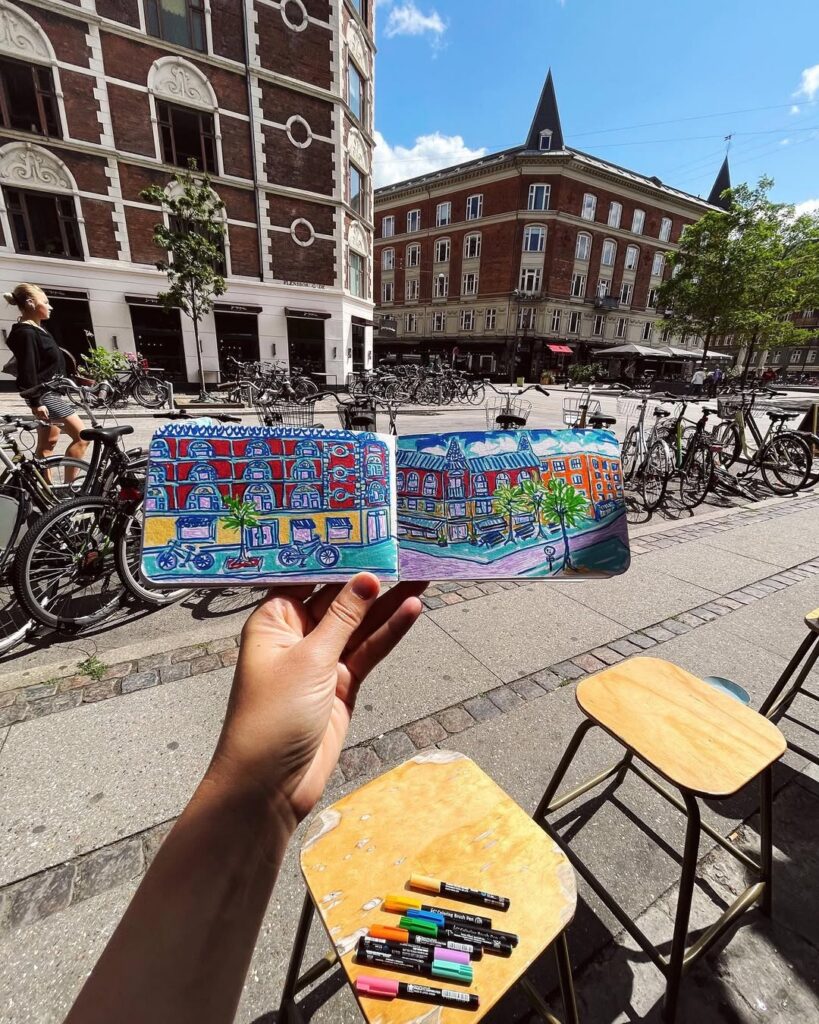
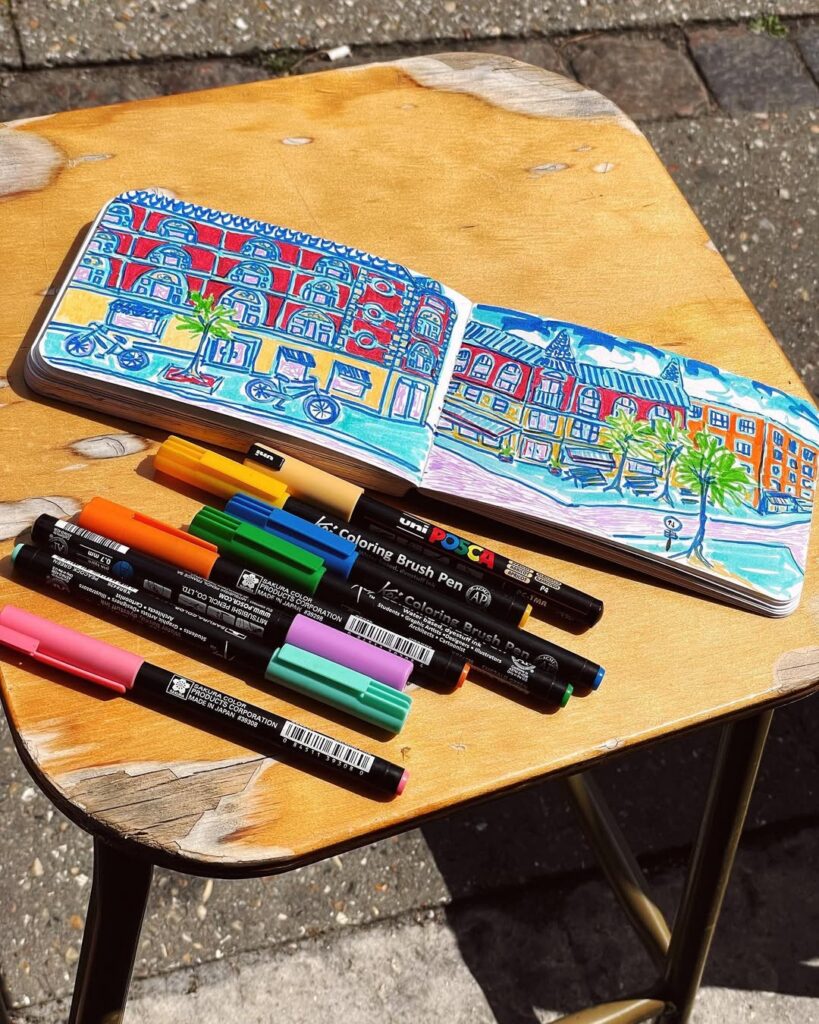
Emily Sharp exemplifies the beautiful synergy between creativity and healing. She reminds us that inside each person is an inner artist—curious, brave, and yearning to be heard. Unlocking that creative voice can take many forms: splashing paint on a canvas, molding clay with your hands, writing a poem in the margins of a notebook, or simply doodling like a carefree child. The form doesn’t matter; what matters is the freedom to explore and express. As Emily has shown, when given that freedom and a bit of guidance, people often find exactly what they need—a release of emotion, a spark of insight, a sense of play, or a community of support.
So next time you feel the urge to create something (no matter how small or “unskilled”), consider this your permission to dive in. As Emily would say, we were all artists once—and it’s never too late to pick up the brush again. Your inner artist is still there, ready to guide you toward healing, insight, and perhaps a bit of magic. All you need to do is make a little space at the table and begin.