Amy Hood is the co-founder of Hoodzpah Design, a studio she runs with her twin sister, Jennifer. Their work is rooted in bold typography, playful humor, and a distinctly Californian style.
In this talk, Amy shares insights into the unique aesthetic of her studio, the dynamics of working with her twin sister, and the importance of community in building a successful design business—with all the messy, human, hilarious moments that come with it.
Let’s dive in!
Listen to this Episode on Bloomerangas Podcast 🎙️
Subscribe to the Bloomerangas Podcast



Developing a Unique Style
When asked about Hoodzpah’s style, Amy shares a refreshingly grounded perspective: you don’t “find” your style—your style finds you.
“I always wonder, how do you find your style?” she says. “I think it’s just innate. Even if you try to change with the times, it always ends up looking like your style.”
Even attempts to imitate someone else’s work fall flat, she jokes, because your hand—and your instincts—give you away. “If you’re not copying something one-to-one, it will always just inform what you already innately do.”
That stubborn consistency, she says, is a blessing. It’s what turns a freelance practice into a recognizable studio. But it can also feel limiting. “When you hit the ten-year mark, you’re like… can I do anything else? Am I stuck?” she laughs. “And then you realize—no, this is me. And that’s good.”
Sisterhood at the Heart of Hoodzpah
The partnership between Amy and her twin sister Jennifer is the core of Hoodzpah’s story—and the drive behind their distinctive voice. Working with a sibling can sound idyllic or volatile depending on who you ask. For the Hoods, it’s both—but always in a way that strengthens their process.
They divide projects so that one sister leads while the other becomes an editor, sounding board, and co-pilot. Their system is supported by one essential rule: the person whose strengths align with the task gets final say. “If it’s copy, Jen gets veto power—she’s the messaging queen,” Amy says. “Someone always has ownership, and we trust each other.”
This partnership demands compromise, letting go, and genuine admiration. Amy admits that when she was younger, she wanted everything done her way. “But then you look back at the projects where you had complete control… and sometimes they’re not great,” she laughs. “Having diversity of opinion usually makes the work better.”

Building a Creative Business Through Community
For many young designers, the early years of running a studio feel like a rush to look established: polishing portfolios, cold emailing, chasing dream clients. But for Amy and Jen, their first steps came through something far more organic—their creative community.
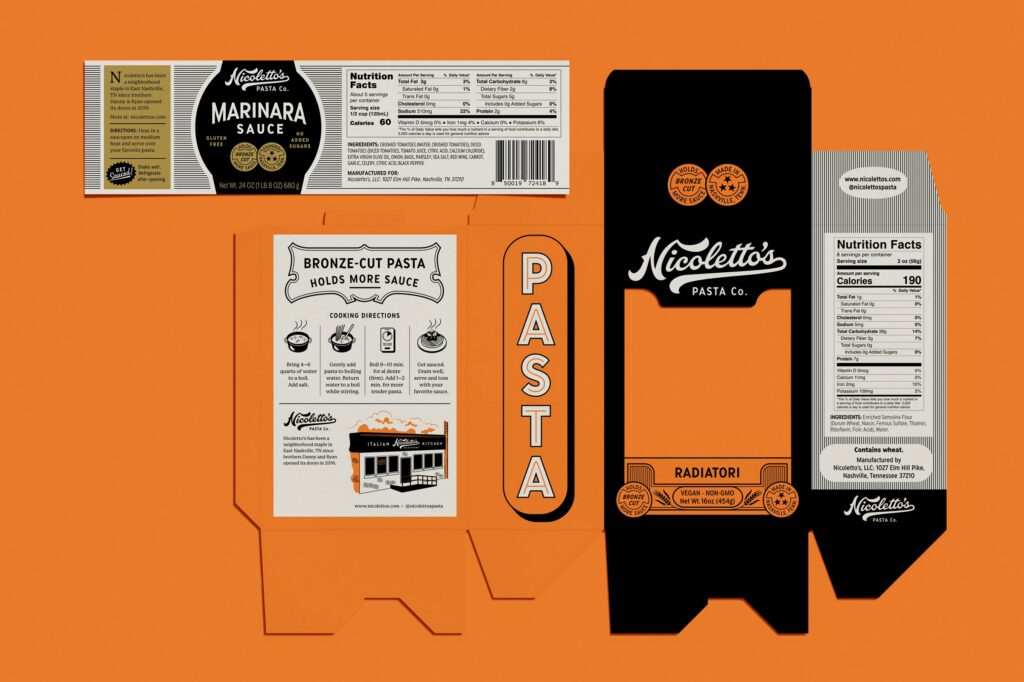
“All of our first clients were friends,” Amy reflects. Musicians starting new ventures. High school buddies building passion projects. A pasta company created by friends from Nashville. “They trusted us—and they gave us fun projects that showed what we could do.”
They bartered logos for photography, reinvented each other’s brands, and even staged a fake busy-office photoshoot with friends sitting at desks so they could appear more “legit.” “That first phase of bartering with your creative friends? I lovethose times,” she says.
These early opportunities created the snowball effect that most design programs never teach: friends grow, friends get jobs, friends refer friends.
“It’s hard to pinpoint. But your friends will go on to do great things—and people see your work through them.”
A New Book for Creatives
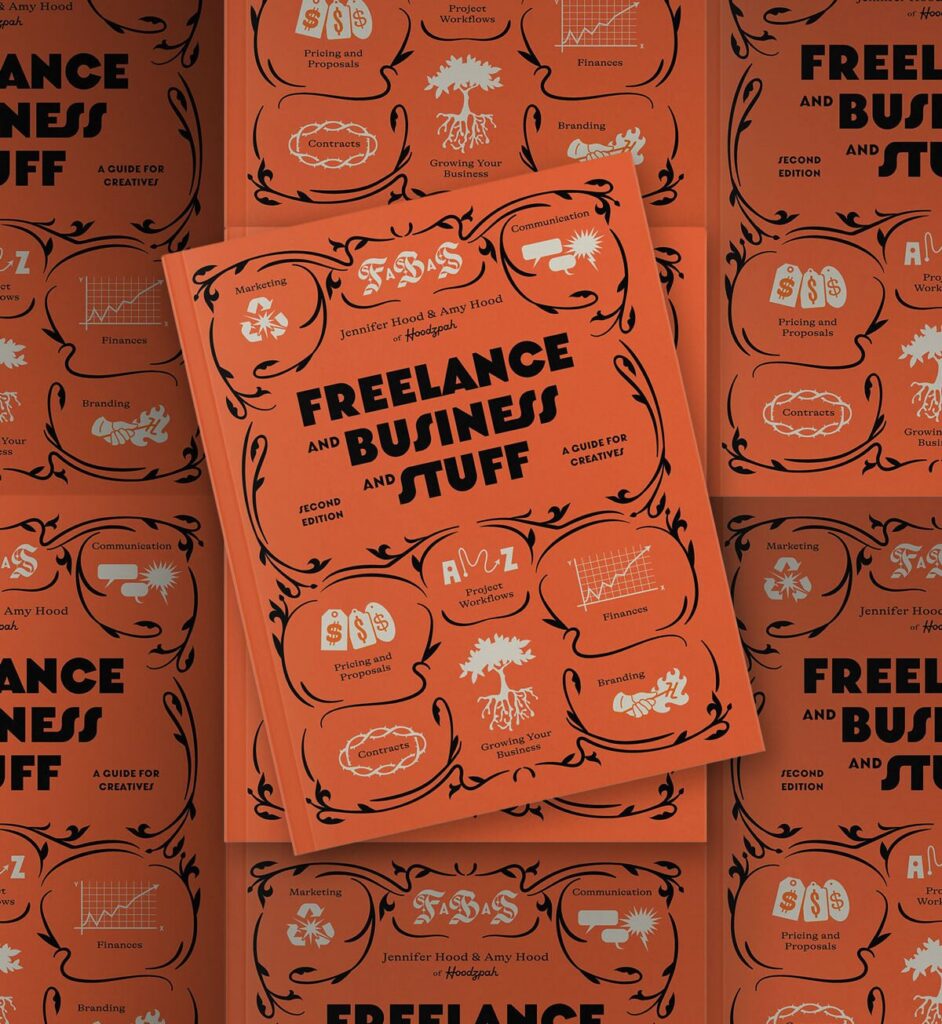
Hoodzpah Design recently released the second edition of their book Freelance and Business and Stuff. It started from a simple need—people kept asking the same questions over and over. Amy and Jen first created a small PDF to share their answers. That little PDF later evolved into a textbook they used in their professional practices class. Over time, they realized the first edition no longer reflected everything they had learned since then, which led them to completely overhaul it into a fully updated second edition.”
Helping others, she says, became its own creative high. “People didn’t learn this stuff in school, or didn’t have a mentor. Helping others run their business well—that’s addictive. Like a runner’s high.”
The second edition took over 510 hours to rewrite. It includes interviews with peers and mentors on pricing, subcontracting, communication, and more.
One insight surprised her most: when asked “How did you get your last four projects?” almost everyone answered, referral or word of mouth.
For Amy, it reaffirmed a core belief: “If you do right by your clients and share what you’re up to, it will always come back around.”
The Hardest Skill Creatives Must Learn
Creatives often struggle with pricing, revisions, and setting boundaries. Amy learned this the hard way at her first design job, where clients were allowed unlimited revisions. “It was a nightmare,” she says plainly. “Unlimited revisions make clients disrespect the process.”
Her solution is simple and effective:
- Define a limited number of revision rounds
- Remind the client at every step
- Charge for anything extra—calmly and confidently
It feels terrifying at first. “You think they’ll hate you,” she says. “But it’s just business. If they get mad, they’re not serious business people.”
Boundaries build trust. And clients want guidance—they hired you for your vision. As Amy puts it: “Everyone wants to feel they’re working with someone who knows what they’re doing.”
Amy’s Take on AI
While many creatives have rushed to adopt AI tools, Amy remains cautious.
For branding work? She doesn’t use it at all.
She’s tried AI for workflow tasks, but “the answers were wrong.” She’s seen disasters created by people relying on AI summaries instead of critical thinking—and she worries deeply about the environmental footprint of large-scale AI.
One recent project illustrated the issue perfectly: a client sent an entire AI-generated brief without reading it. “They kept asking what we meant by words that they had used,” she laughs. “They didn’t know their own brief.”
“It became my problem because they used AI,” she says. Beneath the humor is a real concern: that companies will value speed over substance, and in doing so lose originality.
She’s not anti-technology—she loves Photoshop’s generative tools—but believes creativity should remain human: surprising, flawed, imperfectly brilliant.
“When AI stuff is too polished, you can almost tell it’s AI,” she says. “It lacks the weirdness that makes something memorable.”
Advice for Young Designers
Amy doesn’t sugarcoat it: “It’s such a hard time to break into the industry.” But she offers two pathways forward:
1. Lean into community
Online groups. Courses. Local meetups. Old friends. Anyone who knows you and wants you to succeed.
“Your community will go to bat for you like no one else,” she says.
Both designers she recently hired came from her course community—people who showed initiative, curiosity, and genuine enthusiasm.
2. Work on passion projects
Personal projects, experiments, new skills, weird ideas. “People stand out through their thinking and their own perspective,” she says.
“The two people we hired were constantly making their own fun things,” she recalls. “It shows ownership, curiosity, and motivation.”